
the-24-hour-musical-in-the-swamp-
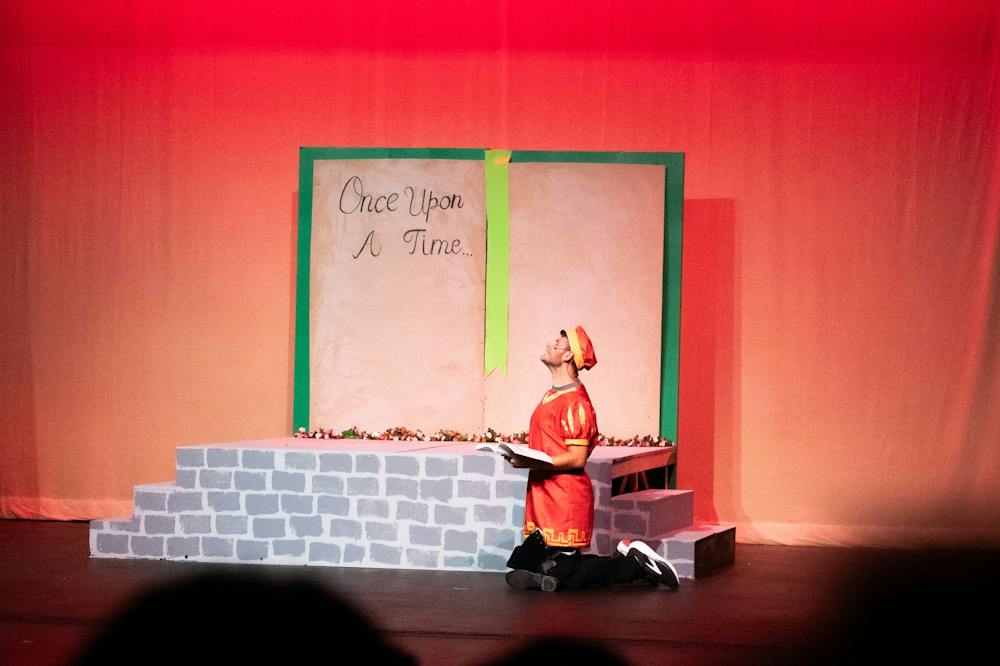
Every year, Brandeis students gather for one of the university’s most ambitious theatrical traditions: the 24-Hour Musical. This fall semester treat, hosted by the Undergraduate Theater Collective, challenges students to create and perform an entire musical in the span of just 24 hours. What begins as a script must quickly become a full production, with students casting the show, learning music and choreography, rehearsing scenes and preparing costumes, sets and technical elements before performing for the student body. Now in its 20th year, the tradition continues to test just how much a group of students can accomplish against the clock. This year, UTC brought “Shrek” to the Brandeis stage, giving students a single day to transform the beloved story into a live production. Actors, directors, musicians, designers and crew members worked together through an unusually compressed rehearsal process, taking on the challenges that come with creating theater on a deadline. What would typically be a weekslong — or monthslong — process was condensed into a single day, making every rehearsal, costume change, musical number and technical cue that much more impressive.
The demanding nature of the event is part of what has kept the 24-Hour Musical a Brandeis tradition for two decades. Students willingly dedicate hours to rehearsals, preparation and problem-solving, often working late into the night to ensure that the show is ready when the audience arrives. There is little opportunity for perfection or starting over; instead, the production depends on students’ ability to adapt, collaborate and keep moving forward. In many ways, the 24-Hour Musical embodies the grit and work ethic of Brandeis’ undergraduate community. Each year, UTC asks students to take on what seems like an impossible task — and each year, they put a musical on stage for their peers to enjoy.
With little to no reliance on scripts and only hours to prepare, the cast quickly turned what might have seemed like a recipe for chaos into a polished performance, proving that the 24-Hour Musical’s biggest challenge can also be its greatest strength. With only a single day to learn an entire production, the actors had little choice but to memorize their lines, blocking and musical numbers at an unusually rapid pace. Yet during the performance, the main cast rarely appeared to rely on scripts, allowing the show to move with the confidence and energy of a production that had been rehearsed for far longer. Maggie Chessman ’30’s portrayal of Shrek gave the character a strong presence at the center of the story, capturing the humor and personality necessary to carry the musical. Ethan Farber ’30’s Donkey brought the quick energy and comedic personality that made the character so entertaining, helping keep the pace of the production lively. Sydney Kelleher ’30’s Fiona helped ground the production with a performance that balanced the character’s humor with the more sincere moments of her story, while Jesse Schindler ’30’s Farquaad leaned into the larger-than-life nature of the character and added another source of comedy to the production.
What made these performances stand out was not simply that the actors knew their lines, but how quickly they were able to get to that point. In a traditional musical, actors have weeks to memorize dialogue, develop relationships between characters and become comfortable with their blocking. The 24-Hour Musical gives performers essentially none of that luxury. Watching Chessman ’30, Farber ’30, Kelleher ’30 and Schindler ’30 perform without constantly looking down at scripts made the amount of preparation behind the production especially apparent. Their ability to remember dialogue and cues after such a short rehearsal period allowed them to focus on actually performing rather than simply getting through the material. That confidence also helped the cast establish chemistry, making the interactions between the characters feel more natural and allowing the comedy to land despite the pressure of the clock.
The cast’s willingness to fully commit to the world of “Shrek” was another major strength of the production. The musical requires performers to embrace an intentionally exaggerated story, filled with fairy-tale characters, absurd humor and larger-than-life personalities. Rather than allowing the unusual circumstances of the 24-Hour Musical to limit their performances, the actors appeared willing to lean into the silliness of the material. That commitment is especially important in a production like “Shrek,” where much of the humor depends on performers being willing to play their characters boldly. The main cast allowed the audience to become invested in the story while still preserving the playful spirit that makes “Shrek” such a recognizable and entertaining musical.
While the main cast naturally received much of the audience’s attention, the production would not have been possible without the work happening behind the scenes. A 24-hour musical requires far more than actors memorizing lines. Designers, musicians, stage crew and other members of UTC had to help construct the world of “Shrek” while working under the same relentless deadline. Costumes, sets, props, lighting, sound and other technical elements all had to come together quickly enough to support the performers once they stepped onto the stage. Every successful transition and technical cue represented another piece of work completed within a single day. That behind-the-scenes dedication is what makes the 24-Hour Musical such an impressive showcase of Brandeis’ theater community. The audience may only see the finished production, but the performance reflects countless hours of concentrated work from students in a variety of roles. The crew had to be just as adaptable as the actors, responding to changes and solving problems as they appeared. In a traditional production, there is time to refine these elements through multiple rehearsals and technical runs. Here, students had to make the most of every available minute.
That accomplishment also reflects the work of director Samantha Landay ’27, who had the difficult task of helping the cast and crew turn all of these moving parts into one cohesive production. Directing a musical under normal circumstances requires organization, communication and a clear artistic vision. Directing one in 24 hours requires all of those skills at an accelerated pace. Landay ’27 had to guide the performers through their characters and scenes while making sure the production continued moving toward its final performance. Her leadership was an important part of creating a show that could feel cohesive despite the limited preparation time.
Now in its 20th year, Brandeis’ 24-Hour Musical continues to challenge students to come together and create an entire production in just one day, a tradition sustained by their willingness to fully commit to the process. Chessman ’30, Farber ’30, Kelleher ’30 and Schindler ’30 demonstrated an impressive ability to learn and perform their roles in a fraction of the time normally available to actors. Landay ’27 helped guide that process from the director’s chair, while the larger cast and crew worked behind the scenes to ensure that the production could actually make it to the stage. Every part of the performance reflected the same qualities that have allowed the tradition to survive for 20 years: dedication, collaboration, creativity and an impressive willingness to work under pressure. For a production created in only 24 hours, “Shrek” never felt like an afterthought. Instead, it demonstrated what can happen when Brandeis students are given an ambitious challenge and decide to meet it head-on. The 24-Hour Musical may only give its participants one day to create a show, but the finished production reflects the hours of effort, concentration and teamwork that students put into making the tradition possible. Twenty years in, UTC’s annual musical remains one of the clearest examples of the determination and creative spirit of Brandeis’ undergraduate theater community.

Please note All comments are eligible for publication in The Justice.