
Nobody wants to go to the NBA anymore
How much would you need to be paid to risk losing out on your dreams?
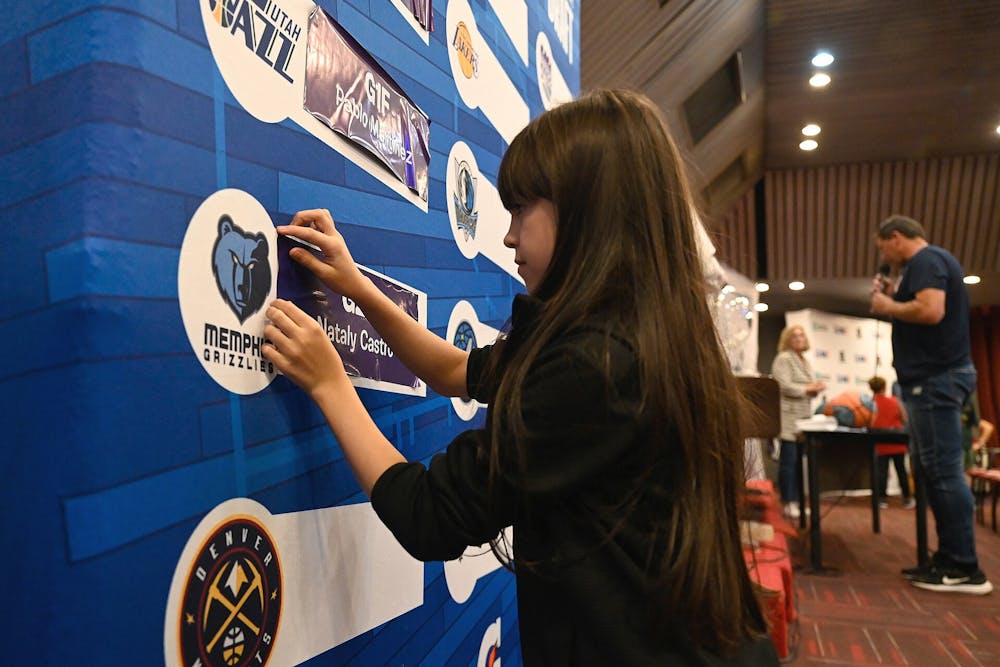
As a fan of the Memphis Grizzlies, a not-so-storied franchise that has never gotten the first overall selection in the NBA Draft, I can attest to how brutal it is to watch franchise-altering top picks put another team’s hat on draft night. It’s an experience unique to the fans and the franchise as a whole. It’s not like later selections can’t do anything, though I watched Jaylen Wells go from the 39th selection to an All-Rookie team, and now a piece of wood with his face engraved into it is on the wall of The Justice’s office. In the same year, we nabbed UConn guard Cam Spencer with the 53rd pick. After a year of terrorizing the G-League, he earned a standard contract and balled out. He led the league in free-throw percentage, shot a phenomenal 45% from three and showed great improvement with his passing. These two made me recognize the gamble it is for players to stay in the draft. By remaining in the draft, you forgo the rest of your college eligibility and spots on a team are no longer guaranteed. Wells and Spencer got picked up by a franchise that is far more willing to give their second-round selections an opportunity, but not all are nearly as fortunate.
With the introduction of players being able to profit off of their name, image and likeness (NIL), the only way you can get these players to declare for the draft is by literally forcing them to, and the National Collegiate Athletic Association doesn’t seem too keen on letting their talent go to the next level. Take former USC Trojans forward Chad Baker-Mazara, for example. He is someone who gets more flak than most for sticking around in college for too long. Baker-Mazara graduated high school in 2020 and only lost his college eligibility with the conclusion of the 2026 season. If you knew you would be able to make millions of dollars playing college basketball, why would you ever leave? It would be an incredibly unwise financial decision to do so, even as a projected second-round talent.
The basketball world recognized this after Duke center Patrick Ngongba II chose to remain at Duke instead of having a solid shot at the NBA. The sophomore played some incredible basketball this past season, putting up over 10 points and five rebounds per game for the 35-4 Blue Devils. He’s the kind of player scouts love; players with his stature rarely play with as much finesse and awareness. More than that, he is an incredibly easy fit on any NBA team. The style of play nowadays rewards having centers that can out-muscle the opponents, opening up space for smaller players to get close to the basket. Despite being projected as a mid-first-round selection, Ngongba decided to return to Duke for his junior season. He would have made a pretty penny as, say, the 15th pick, but the money he could get by sticking around in Durham would be guaranteed and allow him to make even more money next year.
Players selected in the NBA draft are signed to three-year contracts that become cheaper the later they are picked. These contracts, as most NBA contracts do, progressively get more lucrative in their later years. This past season, first overall pick Cooper Flagg earned $11,521,600, but is set to earn over $1 million more by the third year of his contract. For comparison, the highest NIL payout for any men’s college basketball player was when BYU earned a commitment from high school phenom AJ Dybantsa with a deal worth $7 million. Most players earn a lot less, but still in the hundreds of thousands of dollars for the best high school recruits. For comparison, the latest pick in the draft guaranteed to make more than $7 million in one season is the sixth pick.
Transfers are another story. Players who plan to return to college basketball after their freshman seasons are allowed to enter the transfer portal, where they can be recruited to join other teams. The Louisville Cardinals have been unexpectedly dominant in the newly opened transfer portal. They nabbed center Flory Bidunga, former Kansas Jayhawk and the number-one player in the portal, as well as a tenured point guard in Jackson Shelstad, formerly of the Oregon Ducks. Although we don’t know any exact amounts, Louisville presumably had to pay a lot for Bidunga and Shelstad. By increasing their spending on these two, Louisville could get away with paying other portal targets less by giving them the chance to play alongside a pair of big-name commits. They were able to pad their backcourt by adding Alvaro Folguieras of Iowa and Gabe Dynes of USC, plus another versatile guard in Dayton’s De’Shayne Montgomery.
Prior to NIL, transferring from one school to another required the player to sit out for an entire season as a penalty for transferring. With the new rules, players have joined teams in the middle of the season and have been allowed to play before the ink dries on their new contract. Canadian center Charles Bediako stirred up controversy this season by leaving the NBA G-League to rejoin his college team, the Alabama Crimson Tide. Bediako made this deal during the season, but was still allowed to appear in five games.
With the new rules the NCAA has put in place governing player rights, why would players ever want to leave college before their eligibility expires? Plenty of seniors are still selected in the NBA draft, you can transfer around all you want with little-to-no penalty and you get paid way more than you would as an NBA rookie. Hell, even if you do declare for the draft and the big leagues don’t call your name, it seems like you can just come back to the program that you left and get handed a wad of cash for giving up on your dream. Why, then, is anyone with remaining eligibility entering the draft?
One projected mid-first round pick that has bucked this trend is Washington Huskies big man Hannes Steinbach. The German carved out the best freshman rebounding season in recent memory in 2025-26, leading the nation in total rebounds and blocking 1.2 shots a night to boot. Despite being expected to be picked after Ngongba II in the draft and demanding NIL deals in the millions in the transfer portal, he declared for the NBA draft on April 16. In my eyes, Steinbach’s is an incredible show of confidence. The term “bet on yourself” gets thrown around a lot, but it doesn’t get much more direct than this. In order to make back the money Steinbach is giving up in NIL contracts for his career, he will need to earn a second NBA contract once his rookie-scale one expires. With how unusually great his rebounding talent and athleticism are, I have no doubt that he can achieve that.
As much as I love that players are able to earn the money they deserve while playing in college, it breaks my heart a little that I don’t get to see some of my favorite prospects in the league sooner. In a year of incredible production from the freshman class, Santa Clara Broncos forward Allen Graves stood out to me as a player with a bright NBA future. He has better defensive instincts than a lot of pros and the wingspan to turn those reads into blocks and steals. Still, this wasn’t enough to get him out of the portal, although he has yet to commit to a new school.
On the other hand, some players who played out all of their eligibility have deservedly jumped up in the rankings. Joshua Jefferson, a forward most recently for the Iowa State Cyclones, is one of these players. He plays a lot like a bigger, less bloodthirsty Draymond Green: great defense and abnormally good passing for a player of his size, but not a very good shooter. I love the “tweener big” archetype that Jefferson falls into, but they don’t often see much success in the NBA, where players are getting more and more freakishly tall and athletic. Having a player who is too short to hold his own against a center and too slow to keep up with fast power forwards isn’t very enticing for NBA teams. However, I still think Jefferson has the skills to make up for his physical limitations. He processes the game very quickly and accurately, something that allows him to be in a better position than most players are by the time they recognize the play.
Finally, I want to talk about Baylor Bears wing Cameron Carr. While he hasn’t made his decision on where he’ll be spending his next season, he has not gotten the type of publicity he deserves as a prospect. If you watch him play, the most striking aspect of his game is how it doesn’t look like he should be anywhere near as coordinated as he is. He has a ridiculous 7 foot 2 inch wingspan despite being nine inches shorter than that, standing at 6 foot 5 inches. While this does make him look kind of ridiculous on the court, I think it enables him to be very unpredictable. He’s a great athlete, too, so he’ll take off for dunks several steps before the defenders would ever expect him to. His combination of lankiness and speed is a nightmare for players trying to match his rhythm, since no player I have ever seen marches to the same beat as Carr. Maybe he hasn’t declared because he’s waiting to do it when everyone least expects it.
Whatever Carr chooses to do, I know that he’ll walk across that stage on draft night someday. Maybe he’ll put on a Memphis Grizzlies hat. Ultimately, I think the timing of when college players enter the draft won’t hurt them anymore. If anything, allowing players to get their bearings at higher levels of basketball might make the product in the NBA even cleaner. It’s hard to expect 19-year-olds to have their heads screwed on right, and if waiting for another year or two enables them to improve and make money in the meantime, I think players will be better off. These changes are so recent that what we’re seeing this year are likely just growing pains that will mellow out once a precedent gets set. In the meantime, I’ll be manifesting that the Grizzlies get the first overall selection in the draft this year.

Please note All comments are eligible for publication in The Justice.