
McIlroy wins back-to-back at the Masters
History was made today at the Augusta National golf course as Rory McIlroy sank the winning putt on the 18th hole.
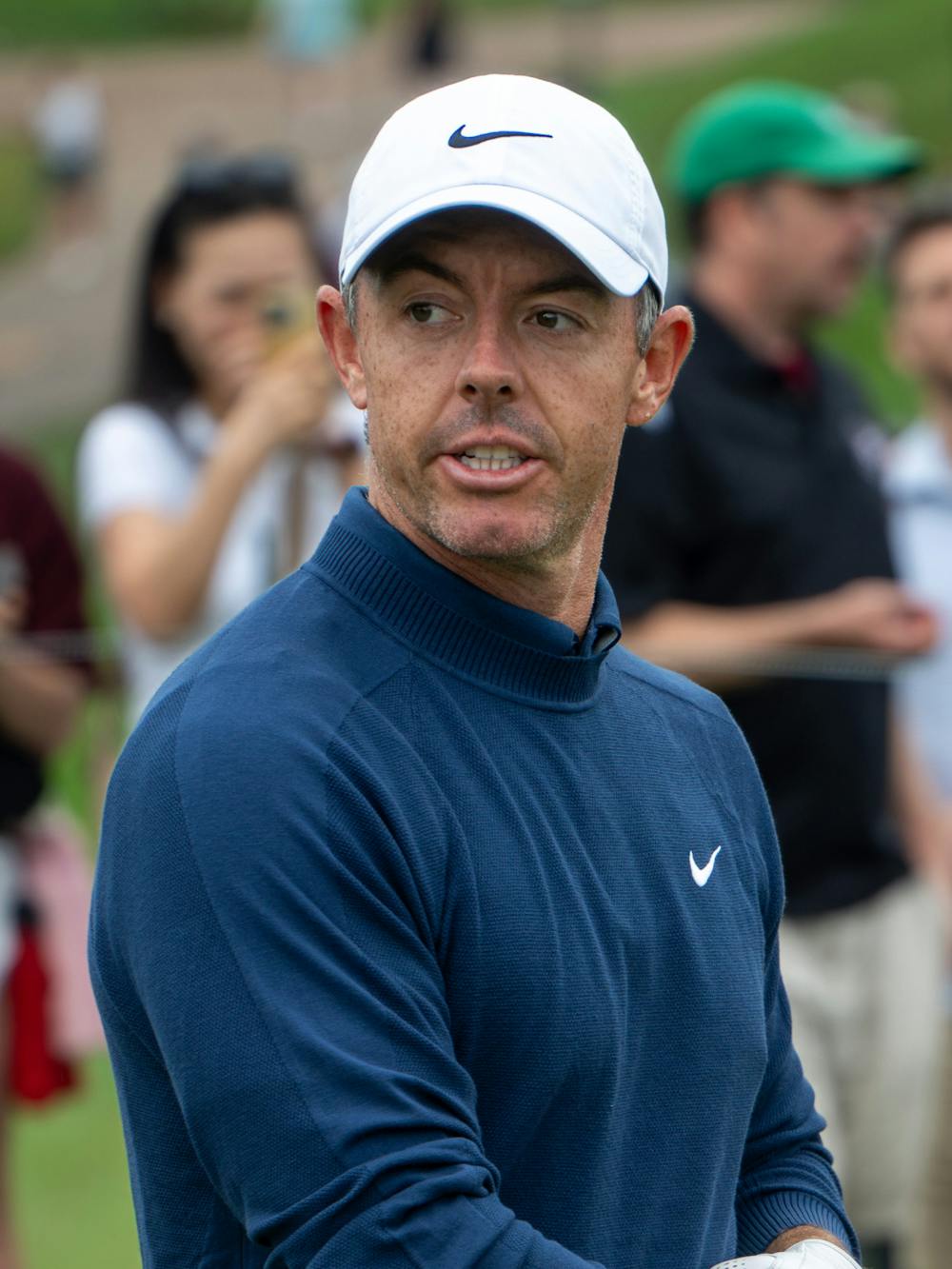
The Masters, golf’s most prestigious event, is a seven-day long tournament that spans across four rounds, a Par 3 contest prior to round one and playoffs on the last day in case players are tied for first after Round 4 concludes. Last Sunday, April 12, Rory McIlroy joined Jack Nicklaus in 1965-66, Nick Faldo in 1989-90 and Tiger Woods in 2001-02 as only the fourth golfer in history to win back-to-back Masters titles. After completing his grand slam in 2025, McIlroy stated that he was much more “relaxed” coming into this round. Held annually at Augusta National Golf Club in Georgia, the Masters is an event unlike any other. Augusta National enforces a strict no-phones policy for its patrons to preserve the atmosphere as a true celebration of the game. It is, as the tagline for Augusta National states, “a tradition unlike any other.”
The 2026 field began with 91 players ranked through major championships in the PGA Tour or past Masters victories. After 36 holes, the field is cut to the top 50 players, ensuring that only the best compete through the weekend. This year, among those who did not survive the cut were Bryson DeChambeau, Akshay Bhatia and Robert MacIntyre, notable names whose exits added to the unpredictability of this year’s tournament. Before the competitive rounds commenced, the Par 3 contest delivered some of the week’s most memorable moments. The tournament welcomed celebrity caddies, expanding their viewer base to individuals beyond just golf fans. Comedian Kevin Hart wore the iconic white caddie uniform to accompany Bryson DeChambeau. DeChambeau also let Hart take a swing on the ninth hole which he shot straight into the water.
DeChambeau reportedly brought a 3D-printed club of his own design to the contest, a nod to his reputation as sport’s most unconventional thinker. Alongside Hart, NFL star Jason Kelce served as a celebrity caddie for Akshay Bhatia. While non-competitive, the Par 3 contest set the tone for the rest of the week. One notable absence from the week was Woods, who was unable to compete following the release of an official statement citing his driving under the influence charge before the start of the Masters. His absence was heavily discussed among patrons.
McIlroy’s opening round set the stage for what would become the extreme of this tournament. His front nine was inconsistent as he was struggling to find fairways. Nonetheless, he steadied himself on the back nine finishing the day at -5 — still not in the lead. Burns led in Round 1 after getting a 67 on the par-72 course. Round 2 was where McIlroy made a comeback. He shot a brilliant 65 to reach -12, establishing the largest 36-hole lead in Masters history and a six shot advantage over Patrick Reed and Sam Burns.
However, golf, especially at Augusta National, has a way of humbling even the most commanding players. Round 3 was a painful watch with McIlroy struggling during tee-offs and finishing with a +1 with a 73. He finished the day in a tie for first position with Cameron Young with the cumulative 54 hole score being -11 for both players. On the other hand, Young’s game for round 3 was noteworthy with him going from -4 after 36 holes to -11 when Round 3 concluded. The commentators were not kind in their assessment of McIlroy’s game on Saturday, and the narrative shifted to whether this would be the greatest fumble in Masters’ history.
The final round delivered everything Augusta is known for. Young briefly threatened to deny McIlroy his place in history, taking the lead in the round, on his way to completing his grand slam. Justin Rose also advanced to the top with a two-shot lead that evaporated around “Amen Corner” where the bogeys on 11, 12 and 17 caused him to fall down the leaderboard. Meanwhile Young closed with nine straight pars but was unable to play the birdie opportunities he needed. Mcilroy birdied the seventh and eighth holes arriving at “Amen Corner” with a one-stroke lead, taking away Young’s chance at completing his grand slam this year. Unlike last year, McIlroy kept his calm, finishing at 12-under for the tournament., one shot clear of Scottie Scheffler who played bogey-free over the final two rounds.
McIlroy won $4.5 million in prize money, and the opportunity to keep the green jacket with him for another year. During the green jacket ceremony, chairman Fred Ridley did the honor of placing the jacket upon the champion’s shoulders for the first time since Woods in 2002. “It still fits,” said McIlroy before the conclusion of the event, which sparked debate over the champion's take on winning such a prestigious event.

Please note All comments are eligible for publication in The Justice.