
The ins and outs of the World Baseball Classic
How the international baseball tournament differs from the MLB
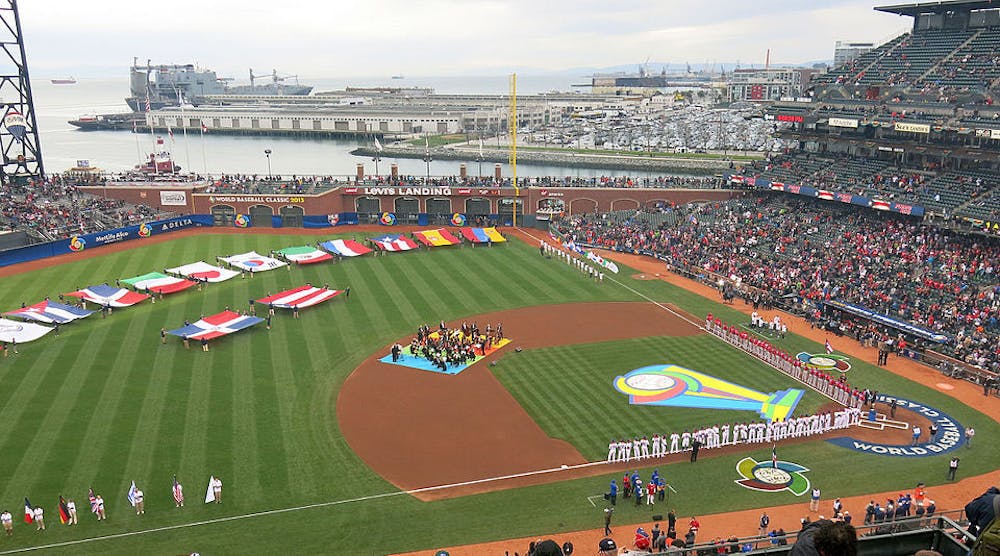
For the better part of a century, the World Series has been the premier championship of professional baseball. However, with baseball's culture rapidly changing, another tournament has challenged the World Series status as pinnacle of the sport. The World Baseball Classic, baseball’s version of the football World Cup, which occurs every three years, commenced this past weekend. Since its inception in 2006, this tournament has begged the question: is it more glorious to play for the biggest baseball league in the world or to perform on an international stage?
Over the span of two weeks, 20 teams compete for the throne of the baseball world. Although it started in 2006, the Classic is partially built on the ashes of former, ineffective international baseball festivities. Before the Classic, tournaments like the Baseball World Cup took place. Starting in 1938, 38 countries participated loosely following Olympic amateur rules. As a result, professional baseball players, such as Major League Baseball players, were barred from joining their respective national teams. Although the ban was lifted for minor league players, major league players never saw their entry permitted. Thus, The Players Union of MLB and the league itself eventually proposed the WBC to the International Baseball Federation. The WBC tournament was conceived in 2006, and it was formatted in a pool-play design, followed by a single elimination bracket where 20 teams in four groups compete to be the last country standing. Of the five previous classics, Japan has won three times, while the Dominican Republic and the United States have each won once.
The proposal of the WBC was an instance of the MLB leaning into the international appeal of baseball. Despite being coined “America’s Pastime,” baseball is drastically more popular in several other countries. During the WBC final in 2023, Japanese television ratings reported that 42.4% of Japanese households watched the game — an impressive feat considering the game aired in Japan at 8:00 am on a Wednesday. During the Puerto Rico vs. Dominican Republic matchup, 62% of the Dominican Republic tuned in. Given these numbers, it makes sense that there is a strong sense of cultural pride affiliated with the game of baseball in the participating countries. Kiké Hernandez of Puerto Rico stated in an interview, “I’ve played in five World Series [tournaments] and I don’t know if it’s because of what’s across my chest, but the Classic feels above that.” Echoing this sentiment, Taiwanese players displayed the significance of the Classic this year through their outpour of emotions after their miraculous victory over Korea in which they mounted a successful upset in extra innings by a score of 5-4. After the match, players broke down in tears of joy, overcome by the emotional win. The WBC puts national pride on the map in a way that the World Series is simply incapable of.
Despite the unique highs the Classic brings, the tournament still lacks the fluidity of the MLB. In the latest edition of the WBC, complications with insurance have lowered player participation, especially in Puerto Rico. Since the Classic’s inception, National Financial Partners insurance has covered MLB players’ regular season contracts for the WBC. This insurance safety net has allowed players to participate without fear of voiding their contract for the year. However, after the past WBC, NFP tightened its criteria for its coverage, as injuries from this edition hurt their pockets more than their liking. In 2023, NFP mostly covered closer Edwin Diaz’s contract after he tore his achilles while celebrating on the field after a victory in the WBC. They also covered, in part, Jose Altuve’s contract when he missed a chunk of the season with a thumb injury he suffered in the Classic as well. As a result, the company was more selective with who they were willing to cover. Several high profile players were rejected from their coverage this year such as Mike Trout, Jose Altuve, Francisco Lindor, Shohei Ohtani and others.
Nevertheless, the WBC is still thriving. In the early stages of this year's Classic there has been a 142% increase in viewership. Powerhouse countries like Japan, U.S., Puerto Rico and the Dominican Republic have all hosted matches. Baseball itself is continuing to head in an international direction.

Please note All comments are eligible for publication in The Justice.