
Brandeis’ GirlUp club marches in Boston
Several Brandeis students came together to protest for International Women’s Day in Boston.
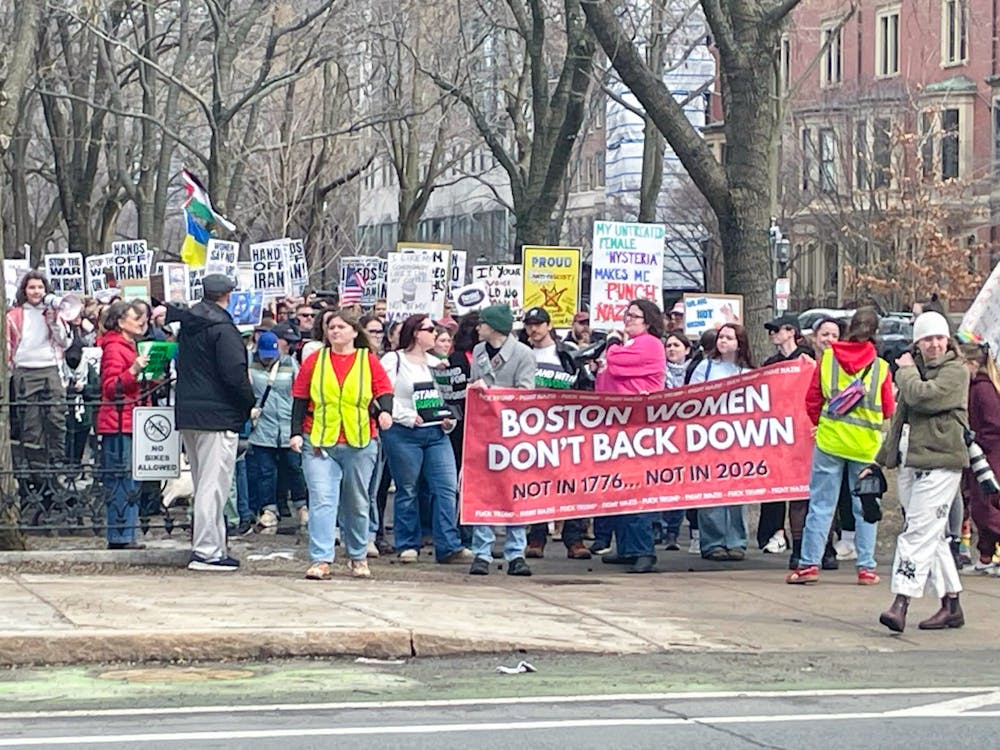
The United States’ celebration of Women’s History Month dates back to 1987 when Congress first passed it into legislation, coinciding with International Women’s Day on March 8. March has been proclaimed Women’s History Month by every president since 1987 and has been given an annual theme by the National Women’s History Alliance. 2026’s theme is, “Leading the Change: Women Shaping a Sustainable Future.”
Boston’s festivities include the International Women’s Day March, which has happened every year since 2017. Initially starting on the day after Donald Trump was first inaugurated, Jan. 2 2016, these peaceful protests are at the forefront of feminism and political activism here in the Boston area.
Members of the Brandeis’ Chapter of GirlUp attended the March 8 protest. GirlUp Membership Director Alexandra Jones ’26 was one of the members in attendance at the protest.“There were a lot of people. I couldn’t give a headcount but we definitely had trouble moving around. There was also a marching band which was pretty cool,” Jones described in a March 9 interview with The Justice. The protest received support from local law enforcement as police were stationed at key points to block traffic for the protesters. The march also had its own volunteer security force to make sure no one would interfere with the peaceful protest.
Jones also talked about GirlUp’s poster-making event for the protest in Skyline Commons on March 6. “It was really nice because there were people who aren’t in GirlUp who came and made posters for us to take to the march even if they weren’t going.” Some of the poster slogans seen at the rally included “Proud Anti–Fascist,” “Women Say No” and a large sign carried in the front of the march reading “BOSTON WOMEN DON’T BACK DOWN.”
GirlUp Outreach Coordinator, Defne Pakar ’27, noted in an interview with The Justice on March 9 the importance of GirlUp participating in the march. “We’ve never done anything like this before off-campus, and there are a lot of barriers involved with that but it’s still a good experience and I think we will do something like this again. Women started this march as a tradition to fight for their rights and until we get to a point where we have basic needs like, for example, access to menstrual products, the rallies will continue every year.”
The march started at Boston Common, where some keynote speakers gave addresses from the gazebo in the center of the park. Jones gave a brief overview of the speakers, “There was an Iranian peace activist who spoke on the war. There was also a college student from Suffolk who was a big voice in the LGBTQ+ community and he talked about the relationship between that movement and its connection to feminism and there was also a [transgender] woman speaker. It was interesting hearing all these perspectives and you could feel a real sense of anger in the air, and rightfully so.”
The rally was by and for women, but also included other political outreach. Jones said “It was for International Women’s Day, but I saw a lot of signs about other important issues. I saw ‘No war in Iran!’ and ‘Defund ICE’ and other anti–Trump slogans. It felt a lot like a No Kings rally but really highlighting the role women play in that movement.”
On the importance of Women’s History Month, Jones said “It’s important for all marginalized groups to be able to fight for their rights and government-sanctioned holidays reinforce the movement and it also makes it possible to look back at all that we’ve gained in the movement. I think it’s also important to keep fighting, especially with everything going on right now.” On how the protest supported this, she said, “The protest just cemented how I feel about this because it was so empowering to hear about how some women overcame these obstacles and the women that inspired them, or even just seeing these stories on social media. It’s all very inspiring.”
GirlUp is a United Nations organization that has chapters on several college campuses. Describing the club, Pakar said “It’s an organization that gives us the opportunity to create community and solidarity with the women on campus and it also gives us the ability to participate in advocacy events, like the rally.”
On the importance of GirlUp, Jones said “It’s good to have organizations, especially during college when people are starting to really form their own opinions, that help them feel closer to their identity and fight for the things that they identify with. I also want to highlight the Brandeis Intersectional Feminist Coalition since they also do a lot for the same movement on campus.”
On other ways GirlUp is celebrating Women’s History Month, Pakar said “We put up an Instagram post highlighting certain women in various sports and clubs on campus and each year we have a panel where we talk about women in leadership. This year the panel is going to include professors who will talk about challenges they’ve faced in their careers.” Asked why the club holds the panels, Pakar said “We get to have personal time with these professionals to ask questions about leadership and hesitation and classroom environment. It’s just really important to hear these stories and it feels really rewarding to put our energy into this.”
Pakar also expanded on how college students can make a difference. “Don’t be afraid to share your opinion. Post on Instagram. Take classes to educate yourself. Reach out to your legislators, I think we’re halfway through the legislative cycle in Massachusetts so email your senators or congresspeople.” On the same issue, Jones continued, “Even if you are too scared to go to a protest there’s still little ways you can support your community.”
When asked how the administration supports GirlUp, Pakar said “A lot of the time they only go halfway. There’s been a lot of empty promises. I’ve seen improvements, but they can definitely do better.” Pakar and Jones hope that in the future their events receive the proper support required to promote positive change.
Brandeis GirlUp continues to find ways to support their community. Protests like the Boston Women’s Day March give new platforms for student voices and allows groups like GirlUp from college campuses to make a real difference. On their impact, Jones said “I want every girl out there who feels frustrated with what’s going on in the world to know that they’re not alone.”
—Editor’s note: The Justice Online Editor Ellie Harris is the treasurer of GirlUp and did not edit or contribute to this article.

Please note All comments are eligible for publication in The Justice.