
Shalit deal poses challenging questions
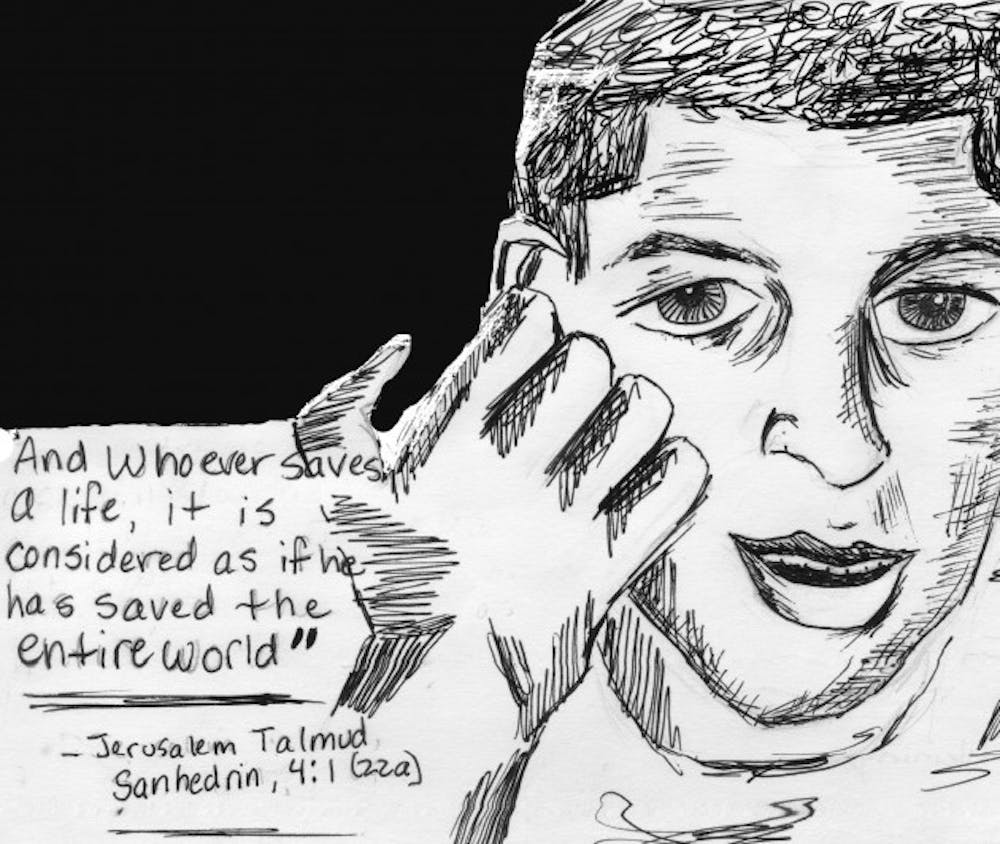
Nobody in his or her right mind would give up one thousand of anything in exchange for one. It would not even enter serious consideration.
After getting out of class last Tuesday afternoon, I went back to my usual seat in the Shapiro Campus Center library and checked Facebook, as I do too many times a day. Instead of the normal chatter, my newsfeed was bombarded with statuses about the historic and unexpected prisoner exchange agreement between Hamas and the Israeli government.
Reports claimed that Israel would release over 1,000 Palestinian prisoners in exchange for Gilad Shalit, who was captured in 2006 during a cross-border raid by Palestinian terrorists on an International Defense Force base in Southern Israel. Shalit has been held in Hamas captivity for the last five and a half years and has been denied visitation by the International Red Cross and other non-governmental organizations.
After many rounds of failed negotiations, one must ask, "Why now?" Why did Prime Minister Benjamin Netanyahu, on Oct. 11, 2011, over 1,900 days after Shalit's capture, agree to such a deal?
Did Hamas drastically adjust its offer? Or did Netanyahu come to a realization that this is exactly what Israel needs now, more than ever?
Following a summer of internal unrest, during which protests against high housing costs and other social issues swept through the state, Netanyahu might have wanted to distract Israeli citizens from his inability to properly address other problems.
Or maybe he wants to prove to the world that he is ready to negotiate with "the enemy" after all and is willing to make very tough sacrifices for peace.
Or perhaps Netanyahu felt the need to take advantage of any window that is currently open, given the uncertainty of the Arab Spring: If Shalit isn't released now, there may never be another opportunity to secure his return.
Whatever way you look at it, Netanyahu and the Israeli Cabinet were forced to make a decision that would affect not only the present, but future Israeli policies as well. Releasing 1,000 prisoners, many of whom are high-ranking Hamas militants serving life sentences and are responsible for the deaths of hundreds of Israeli citizens, is not an easy decision to make.
What will stop Hamas from capturing more Israelis? What happened to not negotiating with terrorists?
Why is Gilad Shalit's life more sacred than that of the innocent citizen who was killed during a terrorist attack planned by one of the released terrorists?
These are very tough questions that we must ask ourselves. Additionally, even though the Shin Bet (Israel's equivalence of the FBI) confirmed that Israel got the best security terms possible in this deal, I am still not sufficiently convinced that this is a deal that keeps Israel more secure.
But in order to understand the swap, we must look at the bigger picture.
In Israel, every male citizen at the age of 18 must enlist in the army. It is not a choice—it is a requirement.
As such, the IDF and Israeli government have a greater responsibility to their soldiers than that of a voluntary military. During combat training, soldiers are guaranteed that they will be brought back, no matter the price, if they are captured by the enemy. How can the Israeli government not act on its word to its own citizens?
The price might be extremely high for Shalit's return, but the morale of the IDF and the families of those serving (which constitutes a majority of Israelis) is of utmost importance. I know that if I were an 18-year-old Israeli and I doubted the IDF's promise to return me no matter the cost, I would be hesitant to take the necessary risks of war, or even to join a combat unit in the first place.
In order to ensure that the most elite and able soldiers will continue to fight and be willing to take risks, Israel must stand by her pledge.
Additionally, ever since his capture, Shalit has become a hot topic in Israeli society. Much debate has stirred over whether or not Israel should do everything she can to secure Shalit's return. The Shalit family tented out in front of the Prime Minister's residence; protests and signs calling for his release, no matter the price, became routine.
To the average Israeli (and many Diaspora Zionists), Shalit became more than just a soldier held in captivity; he was a symbol of Israeli pride. Hamas militants not only captured one staff sergeant in the IDF, but they took all of Israel hostage.
With this understanding, 1,000 for one therefore becomes worthwhile, even a bargain.
It is true that Israel might have lost its upper hand in the negotiations. It is true that there is no certainty that this plan won't backfire and end up leading to more captivities and more terrorism. But these are things that we cannot be sure of.
What we can be sure of, though, is that Shalit's return to his family and his homeland represents more than a mere return of an individual, it represents a return of Israeli pride, Israeli power and Israeli unity.
These are features that have no price.
The deal negotiated and agreed upon by Israel and Hamas, therefore, is one that cannot be doubted and ridiculed, but only celebrated for what it represents on a national scale. Perhaps this is what Israelis have needed all along.
Editor's note: The writer is a sophomore in the College of Arts and Sciences.

Please note All comments are eligible for publication in The Justice.