
We Will Always Love You: Remembering Dolly Parton
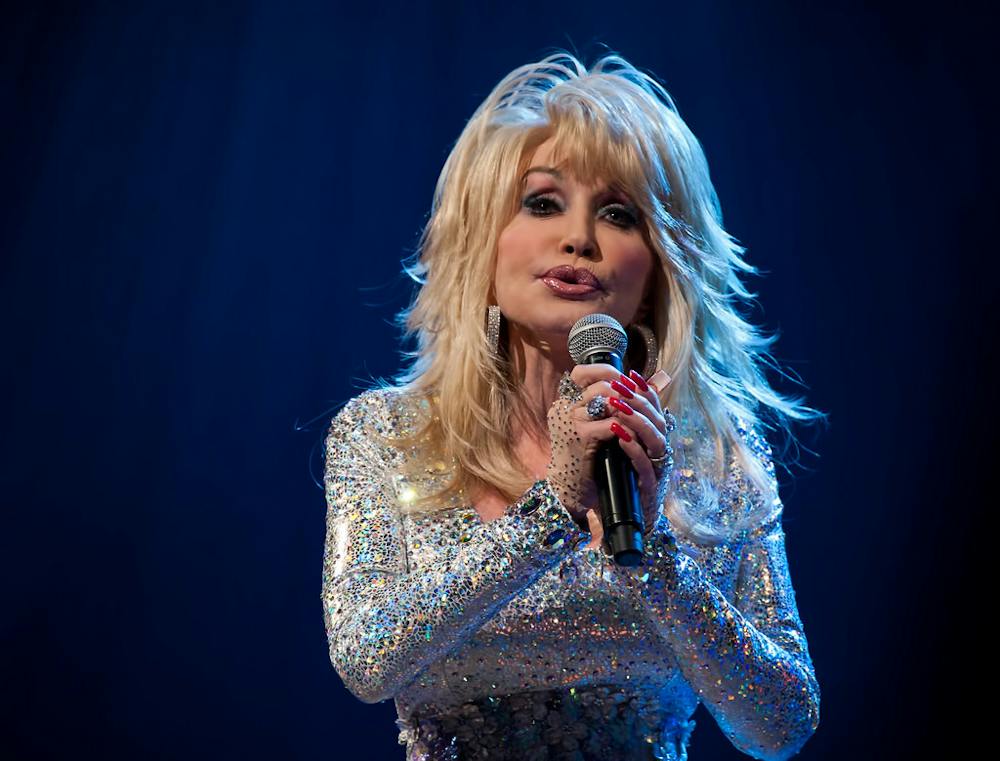
August and September have been a tragic time for beloved artists, celebrities and other public figures. In these past months, the world has lost actress Hayden Panetierre, actor Tim Curry, artist Yayoi Kusama, fashion designer Bob Mackie, feminist icon Gloria Steinem and countless other influential figures. But none have elicited such a strong response as the passing of country singer, philanthropist and businesswoman, Dolly Parton. Parton, who passed away after a brief battle with cancer on Aug. 25 at the age of 80, has inspired countless memorials and tributes from individuals spanning just about every background. Some love her for her music, others for her movies, her sense of style, her charity work or her business ventures — but even to those who weren’t deeply familiar with her work, Parton was truly an American icon.
Parton was born in the Smoky Mountains of Tennessee in 1946, one of 11 siblings in a small cabin without electricity or running water. Her father, a sharecropper, was unable to read and her family was forced to pay the doctor who delivered her as a baby with a sack of cornmeal. Despite very humble beginnings, Parton had a loving family who encouraged her musical ambitions from a very early age. At eight, she received a guitar; at 10, she appeared on local radio. At only the age of 13, Parton performed on the famous Grand Ole Opry stage, introduced by Johnny Cash.
As soon as she graduated high school, Parton made her way to Nashville, aspiring towards a music career. Her first record label pushed her towards a bubblegum pop sound, but Parton would not be restrained. She shortly joined the Porter Wagoner show, signing with the associated RCA Victor record label. Her first solo single with the label, “Just Because I’m a Woman” — a country song which defends women against slut-shaming — would become a small hit in 1968.
By the early 70s, Parton’s career took off, with songs such as “Jolene,” “Coat of Many Colors” and “I Will Always Love You” (about her break from working with Porter Wagoner) hitting the charts. In 1974, Elvis Presley expressed interest in covering “I Will Always Love You,” but his manager, Colonel Tom Parker, demanded publishing rights to the song — an offer which Parton boldly refused. At the time, nobody knew the song would eventually be covered by Whitney Houston and rake in millions in royalties. Given Parton’s less-cemented status as a new songwriter, it seemed like she was passing up a big opportunity. Still she held on to her principles.
Parton stuck to her guns in other ways, too. With her big bleach-blonde wigs, heavy makeup and flashy outfits, Parton had a signature “trashy” look which made her the subject of ridicule over the years. Yet, even when grilled about her appearance, like in her famous interview with Barbara Walters, Parton assured viewers that she was confident in herself and she felt no need to ascribe to others’ expectations of her. Parton also routinely made fun of herself before anyone else could — a sort of defensive gesture which made her appear self-assured and charming, even in the face of cruel or judgemental remarks.
As her career continued to flourish over the years, Parton was known for being kind. Though famously apolitical, Parton publicly supported LGBT rights well before it was common or acceptable to do so. As a co-owner of Sandollar Productions, Parton helped fund the 1989 documentary “Common Threads: Stories from the Quilt,” about the NAMES Project AIDS memorial quilt, among helping fund the production of other projects, including “Buffy the Vampire Slayer.” Parton’s most enduring legacy is her charity work and philanthropic efforts.
Parton founded the Dollywood Foundation in 1988, whose first measure was to give students in her home county $500 for finishing high school (dropout rates subsequently went from 35% to 6%). Parton also covertly paid for high school students’ band uniforms for years, and provided relief for families when fires destroyed much of her county in 2016 through the My People Fund. In 1995, Parton’s Imagination Library opened, inspired by her father’s illiteracy and has since given one book a month free of charge to children up to 5. As of 2026, the library has given books to 120 million children. Beginning in 2022, employees of Parton’s amusement park Dollywood receive free college tuition. Parton has also made large donations to healthcare initiatives which have helped develop the COVID-19 vaccine and build hospitals in Tennessee.
This isn’t to say that Parton always got things right: Many are critical of her choice to remain silent on politics in such a volatile time. Dollywood also ran the “Dixie Stampede” event — a Medieval Times-esque event themed around the Civil War, which framed the Confederate South and the Union as a “friendly and fun rivalry” and painted a whitewashed, romanticized picture of the antebellum South free of slavery or cruelty — for over 30 years. Even though Dollywood eventually apologized and rebranded this event.
However, in a world of billionaires and public figures who stay silent on major issues and remain inactive, Parton stood out as a force for good. Rather than sitting on her piles of money, Parton used her wealth to make the world a better place, showing empathy and humility along the way. Perhaps Parton can serve as an example to other wealthy figures. And even to those of us who aren’t so fortunate, Dolly leaves a legacy of kindness and charity, of believing in yourself, of refusing to conform to what others want you to be and of taking criticism in stride and with confidence. No matter who you are, Dolly Parton has something to teach you. There is no doubt that she will remain an inspiration for centuries to come.


Please note All comments are eligible for publication in The Justice.