
Culture X pushes the limit
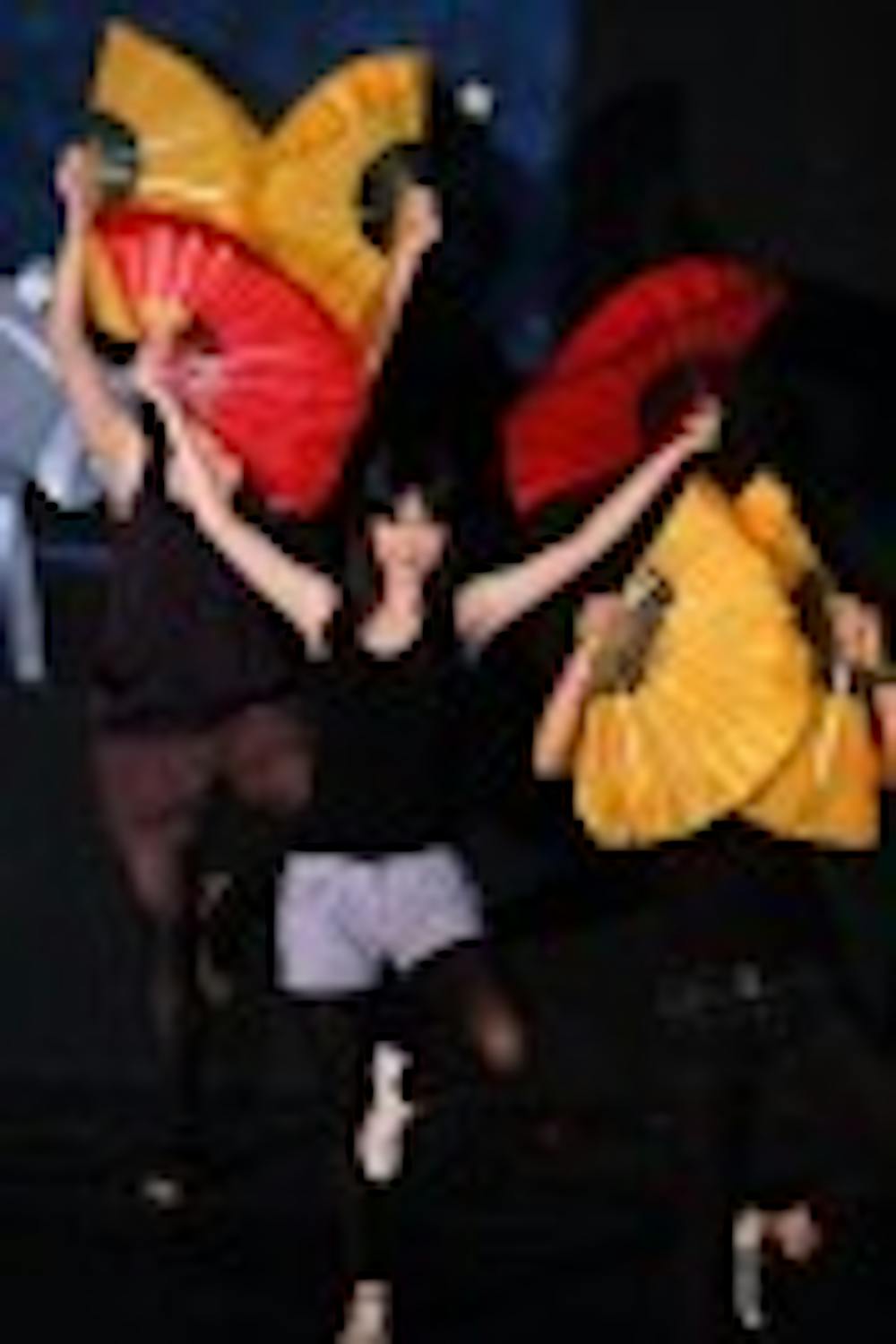
By the time I arrived at the Levin Ballroom, the seats were completely packed with people excitedly chattering about "Brandeis' biggest annual campuswide cultural event," as Culture X's coordinators describe it. The crowd included not only fellow students coming to support their friends or check out the cultural variety of the show, but also adults with little children holding their hands. As the four coordinators, Taisha Sturdivant '11, Talisa Torres '10, Ann-Nin Wong '11 and Kevin Yim '10, appeared in front of the audience, everyone in the room hollered and hooted. After establishing the cheer for the night ("We say 'Culture,' you scream 'X!'"), the performers behind the curtain and up in the balcony, the audience and the staff members all united to celebrate the 10th anniversary of Culture X.As the coordinators successfully heated up the atmosphere, they went on to raise the question: what exactly does Culture X mean? Kevin Yim explained, "Culture X is the embodiment of the idea that everyone has something special to the table . every group has a special way to show their cultural backgrounds. On another level, it could represent a philosophy . [for] any given problem that needs solving, everyone's different perspective gives you, personally, a special way to view your life ... 'X' represents a variable, any person or any thing . that can contribute to making your life more special and more meaningful." Wong further elaborated: "This year our theme is 'Limitless Dreams'. We want to emphasize just how far we've come with the success of this event and our promotion of acceptance, cooperation and diversity."
With that said, the next three hours consisted of 24 different performance groups who were a total delight overall. The first act began with spellbinding music performed by Aatma, featuring Arun Narayanan '10, Ashni Dave '12, Ethan Geringer-Sameth '12 and Chamith Fonseka 'll. The group completely enraptured the audience with an eccentric combination of classical Indian elements, consisting of the vocals and an Indian drum called tabla, with Western instruments consisting of bass guitar and saxophone. The atmosphere became more enthralling as Danielle Myers '12 performed Poi, a Maori traditional dance, with glow-in-the-dark, color-changing balls and as the Korean Student Association performed two popular dances from Korea. However, for the next act the audience became solemn as Tribute to Haiti sang sweet melodies in memory of those who suffered from the earthquake in Haiti this year.
The following acts mainly consisted of a variety of cultural dances, such as a Russian dance that showcased traditional Russian folk dancing fused with lofty gypsy dancing. Argentine Tango introduced a romanticized, flirty couple dance; African Dance, presenting an energetic traditional dance from Mali choreographed by master drummer Jon Camara; and AHORA!, inviting the audience to take a break and indulge in breezy Caribbean rhythms and a display of bachata and meringue.
However, Culture X did not confine itself to the conventional definition of culture, which most people often associate with nationality. Although traditional cultural acts such as the classy performance of Scottish smallpipes by Otis Munroe '12 increased people's appreciation for a culture in the ethnic sense, many groups demonstrated a broader perspective of what culture means to them. For example, the Brandeis Black Student Organization flaunted its own distinctive culture by exerting explosive energy through hip-hop dance. On the other hand, Maze Runner provided a baffling yet comedic performance with references to the Lord of the Rings, displaying their imaginary hobbit culture. Lastly, Michael Castellanos '10 performed a dance inspired by Lady Gaga's "Bad Romance" video, reminding the audience that pop culture is indeed another type of culture to be respected.
Other groups defied categorization under specific cultural groups, such as So Unique, whose creative and original step dance dazzled the audience, and Kaos Kids, whose impressive hip-hop choreography and fearless execution challenged the audience view of hip-hop as just another type of a dance fused from various origins-it too established itself as a proud culture. In fact, Southeast Asia Club got the crowd wild by incorporating modern hip-hop to its traditional Filipino tinikling stick dance. Chak de Deis produced a similar reaction by combining both South Asian and South Asian fusion music. Thus this year's Culture X, a bold fusion of traditional elements and more modern elements such as hip-hop, generated particular excitement from the audience, as exemplified by Mixed Heritage Club's performance of a "hip hop fusion dance-piece exploring the way American identity intersects with other cultural identities." The program went smoothly until the last act, which had a 15-minute delay due to technical difficulties. Once the group decided to play without the microphones, the audience was soon captivated by Mochila's performance of its Arabic-Jazz fusion music, in spontaneous collaboration with the Brandeis Step Team and Dave dancing Kathak. As I left the ballroom, I found myself agreeing with what the announcer Daniel Acheampong '11 told me about his view on the symbolic representation of the letter "X": an intersection at which different cultures meet and react.
Editor's note: Justice staff writers Sujin Shin and Wei-Huan Chen performed in Culture X.

Please note All comments are eligible for publication in The Justice.