Protests of Precedent (3 of 3)
(12/08/15 4:38am)
A Professor's Perspective

Use the field below to perform an advanced search of The Justice archives. This will return articles, images, and multimedia relevant to your query.
A Professor's Perspective
Pearlman Hall
Ford Hall
On a warm fall afternoon inside a classroom in Waltham High School (WHS), six high school students talk about their own petri-dish experiments using sunscreen and yeast. These students are members of the school’s newly recognized after-school science club, which strives to bring a unique approach to high school science curriculums.
Brandeis students exhibit talent in all areas — including music. With a trek to Slosberg Music Center, a night at Chomondeley’s Coffee House or a walk by the chapels, that becomes clear. Students sing, play instruments or rap, but until now, nothing has connected these young musicians to each other or to the outside musical community. Avi Hirshbein ’19 seeks to change that with the establishment of Brandeis’s own record label: Basement Records.
“The themes — the human pain, suffering, passions and desires that we have in our world — are the very same ones that the ancient Greek and Romans had,” Professor Ann Olga Koloski-Ostrow (CLAS) explained in an interview with the Justice. As the chair of the Classical Studies Department at Brandeis, where she has worked for over 30 years, Koloski-Ostrow’s passion for the subject runs deep. She believes that there is a lot to be learned from examining the ancient world and encourages her students to engage in open discourse when learning about the past.
On Veterans Day, students and faculty packed into the Rapaporte Treasure Hall in Goldfarb Library to commemorate the launch of the Civil War Letters Project, a joint exhibition website created with Wellesley College. Brandeis professors Abigail Cooper (HIST) and John Burt (ENG) and Associate Curator of Special Collections at Wellesley College Mariana Oller spoke about the importance of these letters and their significance to the documentation of the Civil War and the preservation of history.
A fully packed room in Mandel 303 on Thursday evening saw a dramatic one-woman performance and a featured talk back with actress Nancy E. Carroll and Prof.Shulamit Reinharz (SOC). Carroll read a translated adaptation of Savyon Liebrecht’s play, “The Strawberry Girl.”
The 7.8-magnitude earthquake that hit Nepal in April of this year crushed entire villages and left hundreds of thousands homeless — but a few structures in Nepal were still standing after the natural disaster.

COMING TO CAMPUS: The Spotlight film will be screened on campus next Monday, and a panel discussion moderated by McNamara, former Globe columnist, and with members of the Spotlight team will be held next Tuesday.
Corrections Appended
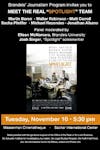
COMING TO CAMPUS: The Spotlight film will be screened on campus next Monday, and a panel discussion moderated by McNamara, former Globe columnist, and with members of the Spotlight team will be held next Tuesday.

REPORTER AND COLUMNIST: Prof. McNamara began her career in journalism as a secretary and worked her way to becoming a columnist.
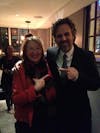
REPORTER MEETS ACTOR: Talia Lepson’16 took this photo of McNamara meeting Mark Ruffalo, the actor who plays Michael Rezendes, a member of the Spotlight team, at the “Spotlight” film’s premiere in Boston on Wednesday.
Stories — we all have them. Whether inspired by life or by a creative muse, everyone has a story to share, and Adriana Gleaton ’17 seeks to facilitate the exchange of these stories through the Faculty and Student Fall Storytelling Event. Organized by Gleaton in her capacity as director of programming for the Student Union, the event will take place on Wednesday, Nov. 4, in the International Alumni Lounge from 12 p.m. to 3 p.m.
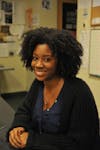
STUDENT STORYTELLER: Adriana Gleaton ’17 is a writer of sci-fi and gothic fiction and took part in the JBS Storytelling as Social Practice program this summer.

SHARING STORIES: Gleaton (center) stands next to Queen White ’16 (right) and Khadijah Lynch ’16 (left) while creating stories using the landscape during the Justice Brandeis semester program.

ALL SMILES: Interim President Lisa Lynch presented both Schneider and DeBerry with their awards on Saturday afternoon.
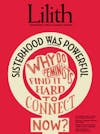
FRANKLY FEMINIST: The Summer 2015 Lilith magazine examines generational tensions to construct a Jewish feminist future.
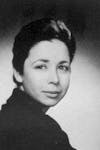
LEAVING A LEGACY: Schneider in her yearbook photo while a student at Brandeis.