
Lunar New Year at Brandeis
How different cultural clubs adapt tradition for a collegiate environment.
Lunar New Year is a special holiday across many East Asian cultures that celebrates the new year according to the Lunisolar calendar: a year that uses both moon cycles and seasons to track months. Here at Brandeis, celebrations of Lunar New Year take many forms across several cultural clubs, but the one thing they share is a mission of bringing people together.
For the Brandeis Korean Student Association, a traditional celebration of the Lunar New Year is Seollal, which the club celebrated in Ridgewood Commons on Feb. 27. Seollal is one of the most important holidays celebrated across both North and South Korea and includes many traditions of reverence for our elders and ancestors, but also food and games. KSA President Eva Shim ’27, in an interview with The Justice on Feb. 27, noted the importance of the holiday; “It’s a time to look back and reflect and have people around me that I love.”
One of the foods commonly prepared is rice cake soup, also known as tteokguk. KSA prepared the soup themselves, and also had toppings of fried egg, green onion and seaweed to add to the tteokguk. KSA Event Coordinator Heejae Kim ’28 spoke in an interview with The Justice on Feb. 27 on the significance of the soup, saying that “the rice cake itself is considered a very lucky food because it’s in a coin shape and the white broth is a bone broth that symbolizes purity and kind of a fresh start for the new year.”
President Shim also elaborated about the importance of bringing Seollal to Brandeis. “Some of us don’t get to spend it with our real family so we spend it with our KSA family instead,” said Shim. On adapting the traditions for a college environment, she said, “We don’t alter much at all. We made the soup ourselves although we did serve it in red solo cups which may be a beautiful fusion of peak college.”
Meanwhile, KSA Freshman Representative Jimin Geum ’29 said in a Feb. 27 interview with The Justice that celebrating in a traditional way helps her feel more connected to home, “I haven’t had Korean food for so long and it really reminds me of home because I’m having it with people that I know I love.” Geum seemed to share Shim’s sentiment on eating with other people in KSA, “In Korea, eating together literally means family, so like, we’re all a family.”
Attendee Xudong Yuan ’27 reflected on his own cultural traditions in a Feb. 27 interview with The Justice. “In Chinese tradition, when we make the dumplings for Chinese New Year, we will put a coin in one of the dumplings, and that symbolizes good luck for whoever receives it.” The motif of a coin is strikingly similar to the intention of the rice cakes in the tteokguk. Yuan furthered these cultural similarities; “It’s different food, different games, different traditions but same spiel. It’s about being together.”
President of Club Cantonese at Brandeis Isabella Chan ’26 said in an interview with The Justice on Feb. 27 that for their new year competition last month, they decided to host an egg tart baking competition in Skyline Commons. “An egg tart competition was our new year event because egg tarts are a really popular dessert in China.” Egg tarts are one of Hong Kong’s most popular foods, and as such are important identifiers with Cantonese culture.
Chan believes in the importance of sharing different cultures at Brandeis. “We try to bring in a lot of various people of Cantonese descent who can display various aspects of Cantonese culture in order to basically show a maybe more niche aspect of overall Chinese culture that is Cantonese culture.”
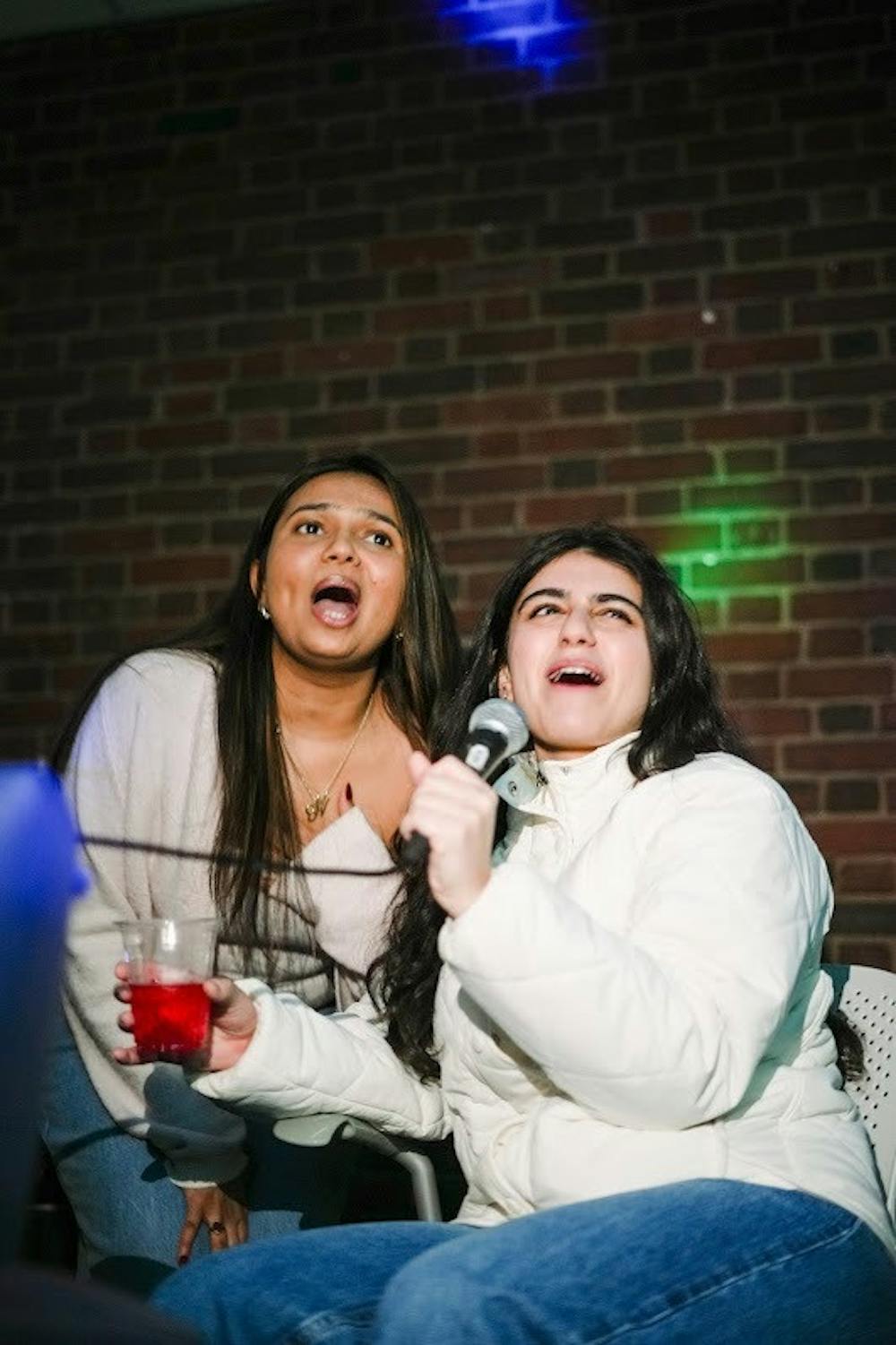
C2B also hosted a karaoke night on Feb. 27 inspired by Lan Kwai Fong, a small cultural district in Hong Kong where much of Cantonese culture originates. Chan said that putting on fun events like these are vital for sharing culture. “Not only is it fun for us, but it’s also . . . educational, historical way for other people around campus to come around and enjoy,” explained Chan. She added that a university setting can be the perfect place to introduce people to a new culture. “Lan Kwai Fong is all about city life back in Hong Kong, so we’re trying to recreate that here to bring back the Cantonese spirit but everyone is welcome here.”
For those celebrating with Brandeis’ Riichi Mahjong Club, games are the best way to break in the new year. Treasurer and co-founder Dari Axelrod-Freed ’27 said in an interview with The Justice on Feb. 27 that they believe celebrating a key aspect of Chinese customs on Lunar New Year can create a comfortable environment for all attendees. “A sizable proportion of our club is made up of Chinese international students and I think it’s important to do events like this for them since they maybe can’t spend this time with their family like they usually would.” Boba and Chinese snacks were served in the Shapiro Campus Center as several games of mahjong were set up. This accompanied by low lighting and small paper lanterns strung on the walls created a welcoming atmosphere.
Vice President Irene Lee ’28 said in an interview with The Justice on Feb. 27 that Lunar New Year has the ability to bring a college campus together. “I think it’s a holiday where, no matter how long it’s been since you’ve seen someone or how far away you are from them, it still brings you together.” She said, “Everyone gets together and we laugh and we chat and we catch each other up on what’s been happening and we do that here too.”
Cultural clubs at Brandeis play an important role in bringing together the student body. Shim mentioned that “There’s a huge mutual respect between the cultural clubs. I always try to go to their events when I can.” She concluded with her thoughts on the Brandeis community as a whole, saying “I have a positive view on how the Brandeis student body treats cultural clubs. It just reiterates for me that there’s support for us out there.”
“We’re all very proud of our heritage, even if some of us aren’t entirely Cantonese, but we try our best to bring forward certain aspects of Cantonese culture in every single one of our events for the Brandeis community to enjoy,” said Chan, affirming the idea that a cultural celebration can bring students closer together.
No matter how you celebrate, Lunar New Year is a time to get together with people you care about and bond over good food and games. Here at Brandeis, the cultural clubs celebrating Lunar New Year go the extra mile to make sure all are welcome regardless of ethnicity and in doing so brings the student body closer together.

Please note All comments are eligible for publication in The Justice.