
Brandeis Consulting Club: Coming this spring
In an interview with The Justice, co-presidents Gianna Crisha Saludo ’28 and Malake Loukili ’28 elaborated on their plans to charter the new club this semester, as well as their objectives for the next academic year.
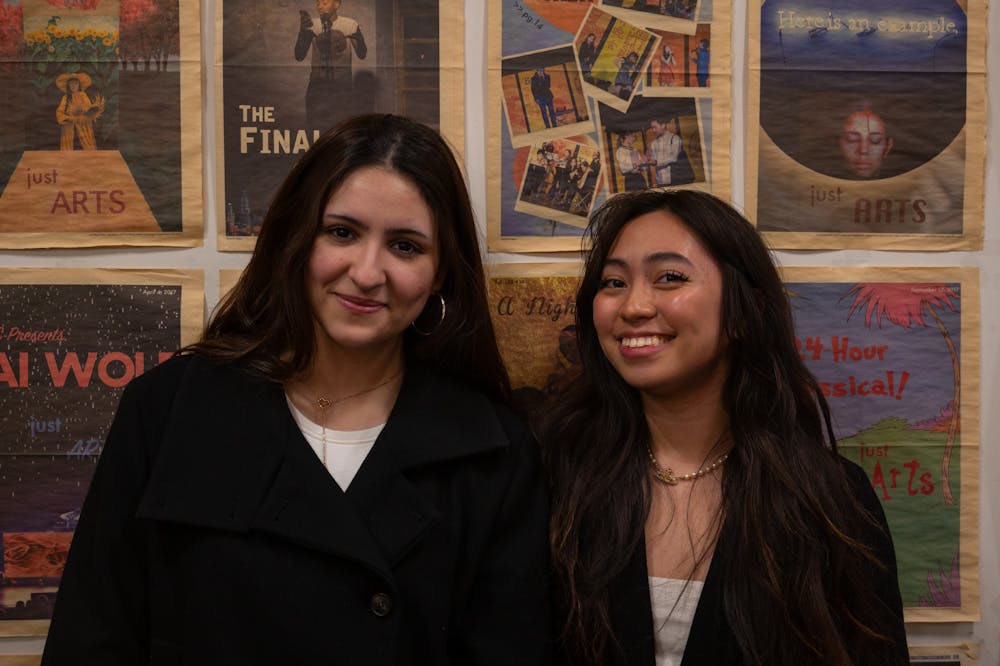
Starting in fall 2026, the Brandeis Consulting Club is planning to offer alumni-led workshops, opportunities for pro-bono consulting and case competition events for undergraduate students interested in honing their consulting skills. In a March 20 interview with The Justice, the club’s co-presidents, Gianna Crisha Saludo ’28 and Malake Loukili ’28, outlined the origins of the club concept, their objectives for its programming and where its logistical planning currently stands.
Saludo and Loukili have discussed starting this club since their first year at the University, and while they are part of other clubs that feature aspects of consulting in their work — such as DeisHacks and TAMID Group — there are no extracurricular options that focus on the topic full-time. DeisHacks is an annual hackathon event held at the University where small groups of students, faculty and community members work together to solve problems for local nonprofit organizations. The Hackathon runs for 48 hours, challenging Brandeis community members to tackle issues that arise in “areas like education, healthcare and housing, fostering creativity, technical skills and social impact,” according to the School of Business and Economics’ webpage. On the other hand, TAMID connects students with consulting, business and finance opportunities with organizations that are based in Israel. Although the University once had a Consulting Club, Saludo and Loukili said that it was de-chartered.
“I was involved in DeisHacks and we were basically consulting for nonprofits,” Saludo said. “What if we extend it a little bit more, take it one step further and do it not just for startups at Brandeis but also startups around us?”
Loukili and Saludo each emphasized that consulting is applicable to a broad range of industries, which also inspired them to found the club. Loukili described, “There’s healthcare consulting, technology consulting, and we think it’s something that not many people know about.”
Applications for the club’s executive board have recently closed, and the co-presidents shared that they will be dedicating the rest of this semester to following the Student Union’s procedure to charter the club, planning an event for after Passover Break and outlining plans for the fall 2026 semester. They expressed excitement about their e-board members’ passion for consulting, stressing that the primary quality they were looking for in candidates was a willingness to help the club prosper. “They’re very innovative, creative and I feel like they’re amazing problem-solvers,” Saludo said.
The club’s inaugural e-board features Suri Nguyen ’29 as the operations and logistics head, Kristen Nguyen ’28 as the marketing and communications head, Oswell Sakaguchi ’29 and Mo Blair ’29 as partnerships and outreach heads, Daniel Liang ’28 as the finance head and Jenny Chen ’29 as the recruiting head.
Saludo said that the board members have already raised event ideas and suggestions. “We want them to have agency and lead their committee the way that they envision it to be, and for everyone to contribute their ideas to every single one of the committee heads,” she explained.
Saludo stressed that the Partnerships and Outreach Committee is integral to the club’s event programming for next semester as they coordinate with University alumni in hopes to have them lead a variety of workshops for undergraduate students. According to their club’s website, these workshops will allow students to foster essential consulting skills such as “case framework mastery,” “presentation and communication skills,” “Excel modeling fundamentals” and include “strategic thinking exercises.”
Loukili and Saludo shared that they have been in communication with the Hiatt Career Center and multiple university alumni, including the Brandeis Consulting Club’s last president before it was de-chartered. They said that many of their alumni contacts have used their background in consulting to move onto jobs in the finance industry, given that the necessary skills are applicable to such a broad range of specialties, including healthcare and education. “[The alumni] are all doing something completely different,” Loukili reflected, “but then at the same time, still consulting, and something we want to bring to our club [is that] there’s not one specific thing you have to learn, and that’s it. There’s no one-size-fits-all training for consulting.”
The club’s projected organizational structure will encourage general members to fill out an application that will match them with one of the Consulting Club’s local partners by their interests. Ideally, the club will partner with nonprofit organizations across all applicable fields — general members will be divided into dedicated project groups for each organization. Their long term hope is to partner with organizations across the University, Waltham and the greater Boston area.
“Our main goal right now is building our portfolio to build our credibility,” Saludo clarified. She explained that the e-board will be connecting with nonprofit startups in Waltham and Brookline to ensure that the club will deliver impactful work: “We’re tailoring down our Constitution to make sure that passes on to the succeeding e-board.”
They acknowledged that a misconception about consulting is that it’s expensive work. Since the Consulting Club’s work will be pro-bono, Saludo stressed that their work will be completely accessible, giving these organizations the chance to accept students' perspectives and ideas. “We’re tech-focused … and since we’re like digital natives, we have a lot to offer businesses who are starting up but don’t know the current tech and how to keep up with everything,” she said. Additionally, the club’s consulting will not be restricted to technological innovations as it will also provide students with the opportunity to give companies design recommendations. The club’s intent is to provide specific advice for every partnering organization’s individual needs.
Alongside hosting alumni-led workshops, Loukili said they are aiming for the Consulting Club to host a case competition, which would allow Brandeis students to compete with other institutions’ consulting clubs in the Boston area. Case competitions can differ in terms of format, but at their core, each team receives a business problem to recommend a solution to. Hosting a case competition at the University is the club’s final goal for the upcoming semester, aside from the club’s typical programming. Saludo hopes that with the decade anniversary of DeisHacks, there might be an opportunity for the consulting club to officially collaborate with the event programming.
Loukili said that the benefit of consulting is that different individuals catch mistakes and can offer suggestions that others might have missed, and the club will provide students with a forum to grow more confident in their instincts. “Sometimes people can be shy … but the importance of consulting is you literally get hired to give your perspective on something that could be very important,” she said. Not to mention, members can join the club with one aspect of consulting in mind, such as design, and eventually branch out to other specialties, like technology consulting.
“We want actual impact,” Loukili emphasized. Both co-presidents elaborated on the importance of working with local Waltham organizations and having measurable, impactful outcomes, rather than partnering with large brands.
As Saludo and Loukili move forward with the club chartering process and lay the groundwork for their club’s fall 2026 semester programming, their vision for the Brandeis Consulting Club reflects their commitment to assisting local startups, teaching undergraduate students and establishing a working connection between undergraduate students and University alumni.

Please note All comments are eligible for publication in The Justice.